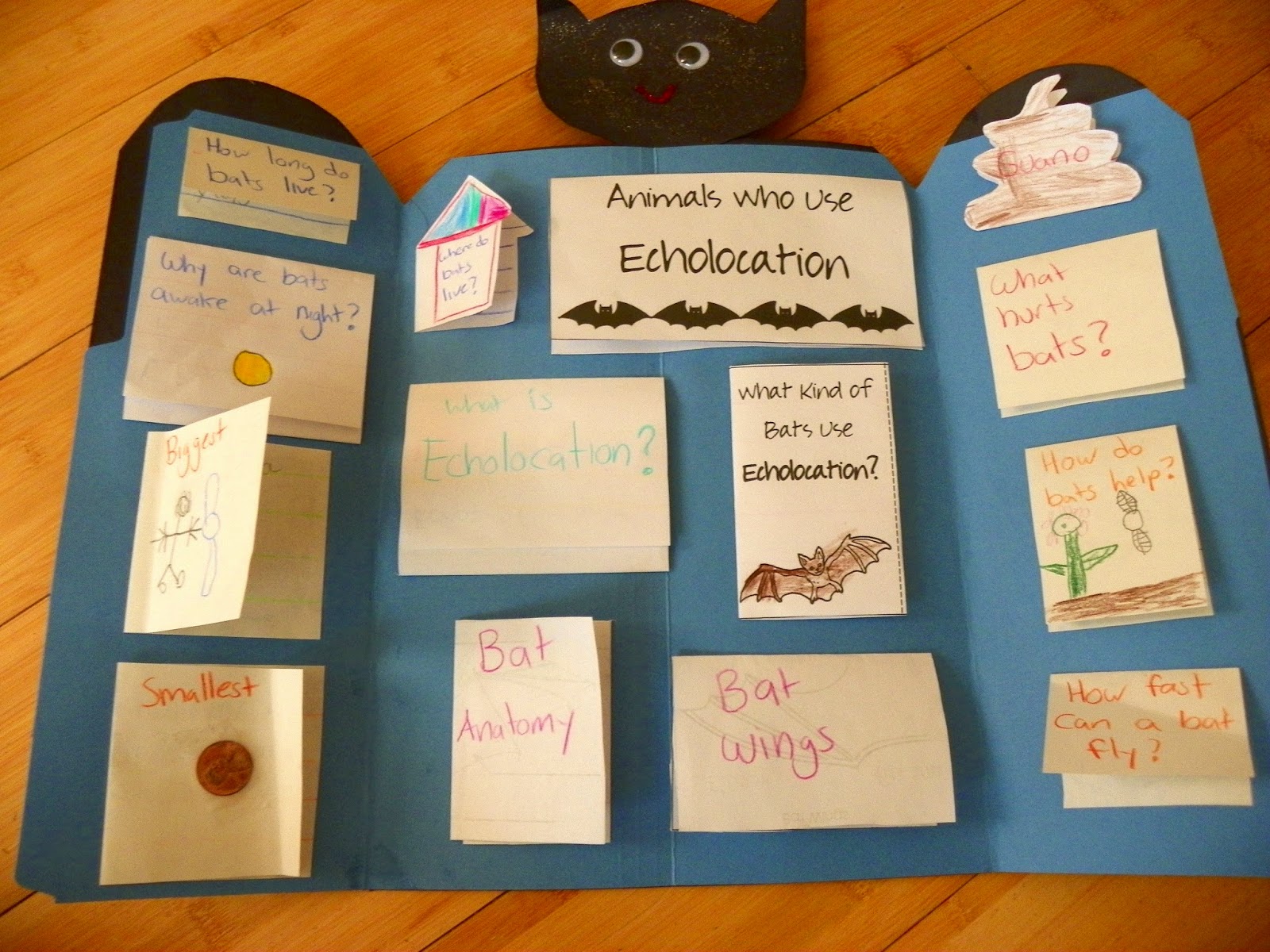
I also made a lot of lapbook elements mostly using the fact boxes from the Magic School bus bat book. I just wrote the title or question on the front and Levi filled in the inside.
We also used the FREE animal report pages from Teachers Pay Teachers. I can see us using this again for other animals, its laid out really well and includes all of the main things we learn about when studying an animal.
At Levi's request, we learned all about frogs! For this unit study we read a lot of books, did some art work, jumped like frogs, made a lapbook, did some math, and I even made him a new outfit to wear.
We found these little guys in our backyard:
I made Levi a frog outfit. He chose the fabrics for this one, the shirt is super bright "hurt your eyes" neon yellow. The shorts and applique are a vintage paisley fabric that I think I got at a thrift store. I wasn't too sure about the combination, but I think it works in the end. He loves the result!
Here are (some) of the books we read, the rest were from the library. Also seen here is a frog puzzle, a model of a frogs internal organs, and a box of model frogs with cards to match.
Here is the finished lapbook:
Cover
Inside
Inside
This is a frog lifecycle book we put together and he colored. And a color-by-number multiplication I found.
This is the artwork we made, I used the lesson plan from "Art Projects for Kids". I really liked the idea of using a partial template for him to trace, and having him add his own feet to the frog. We used lemon juice to make the spots on the frog, which were more subtle than I expected. The frog drawing on the right is copy work from Draw, Write, Now. The drawing technique for this one had you start by drawing a triangle, and then adding the frog detail on top. I thought that was a good way of helping figure out placement for the different frog parts. His handwriting on this is really nice too!
Levi did a polar bear water color painting that I thought came out wonderfully! I found the tutorial here.
The homeschool/sewing room after a couple days for hard work and two messy kids! They are in the middle of several projects, the main one here being "snow painting", where they drizzle slightly watered down elmer's glue onto dark paper, and then sprinkle with salt. This one is more for the process than the results, but the salt does dry sparkly.
Another variation is to paint the dried salt/glue with water colors, we did this here
And another fun "snow paint" is shaving cream/elmers glue mixed, which makes a fluffy white paint that dries puffy. We did that one here. (scroll down to the bottom of the post)
(that is part of a yoga mat, makes a nice work surface!)
Levi learned how polar bears cross thin ice, here he is demonstrating how this is done:
And here is the finished lapbook, it also includes arctic animals.
I also made a "travel brochure" template, which can be used for this book, or for anything else. In Mr. Popper's Penguins, Mr. Popper dreams of travel. So one of the activities we did was to design a travel brochure. This template is a blank that has some info for kids to fill out to create there own. This would also be a good one if you are studying a particular country, city or area. Travel Brochure
Most of the activities we did are up in the templates link, but here is one we did on Penguin Beaks. We learned that penguins have a rubbery grip inside their beaks to help them hold onto slippery fish. We folded a model of a beak, and then did some experimenting. He had to pick up a slippery chapstick tube using chopsticks, and then we added rubberbands to see if there was a difference.
Another experiment we did was to find out about penguin feathers. They are covered with oil. So I put some olive oil on his hand to see how the water beaded up.
And here is the finished lapbook, it is many pages long!
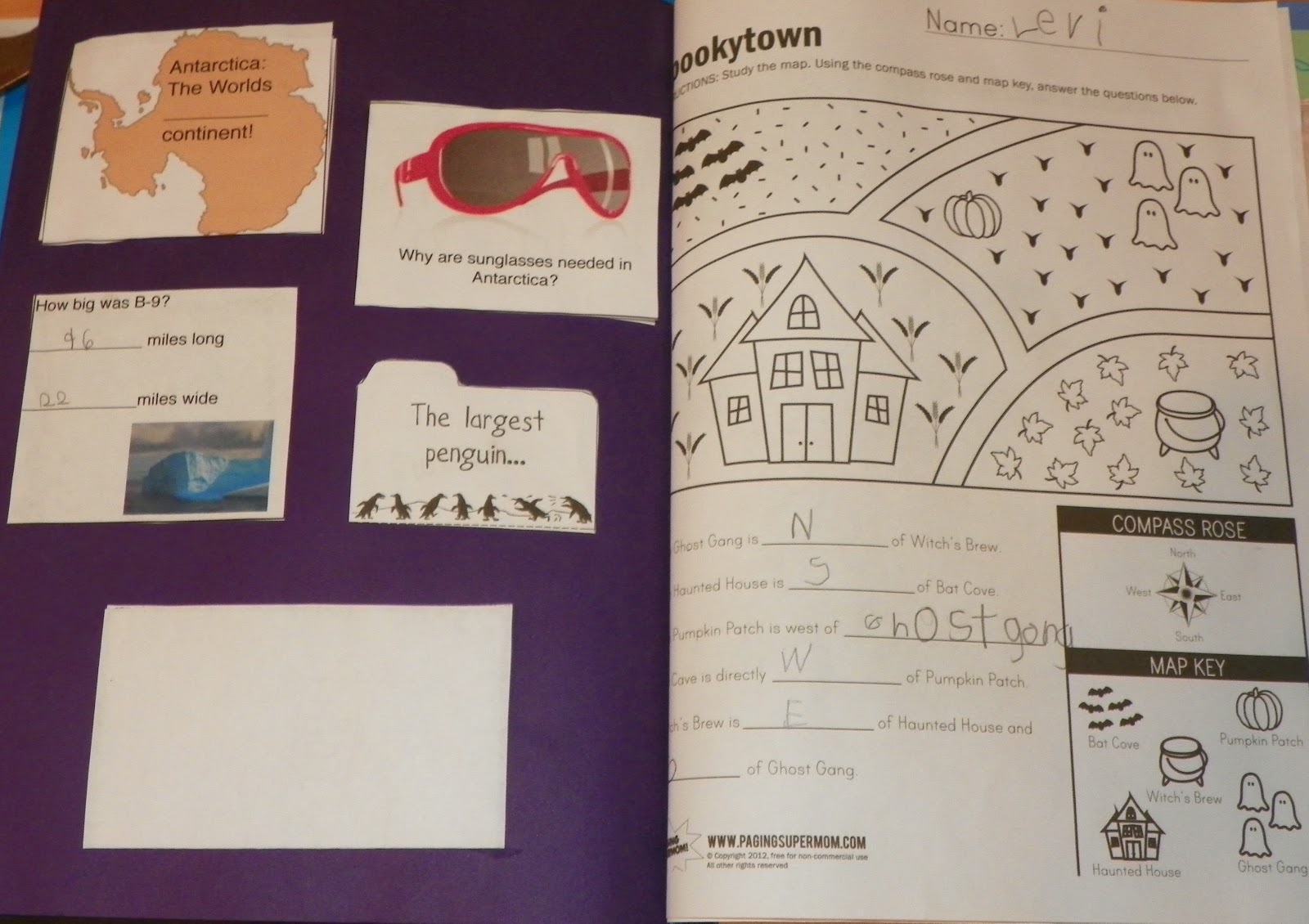
On the right is a map activity I found someplace, its Halloween theme, but oh well!
On the left is the back of a page where he chose pics from National Geographic magazine to cut out. On the right is a made up pet.
This is the travel brochure he made.
Copywork, all is from Draw, Write, Now.
His handwriting is literally better than mine already!
This was another LONG unit, but he really likes the book, so it was fun for him! I try and go deeper into the topics he is most interested in, and just cover the basics on ones he isn't as into.
These are some of the elements included in Levi's lapbook:
Inuit definition: Inuit simply means “The People” in their own language, refers to the indigenous people of the Arctic.
Scrimshaw definition: The Inuit engraved pictures that told stories in ivory walrus tusks and whale bones. When their engraving was completed they rubbed the carving with lampblack to make their picture stand out.
These tusks depicted stories of whale hunts, dog sledding, caribou, and other various animals and people. Carvings The Inuit are famous for their soapstone, bone and ivory carvings. Most carvings were pieces used to tell legends or small figures that served as toys for children.
The Inuit also carved and decorated their handmade tools. Pieces were often of animals, especially polar bears, seals and walruses, as well as people and other wildlife.
To replicate Scrimshaw, Levi carved a bar of soap using a wooden stick. When he was done carving, we rubbed the soap with black paint and wiped the surface to leave the paint in the groves.
Inuksuk: An Inuksuk is a monument made of un-worked stones used for communication and survival. They have been used by the Inuit as guides and markers, pointing out trails, nearby people or even the migration routes of caribou.
These markers have been vital to the Inuit, marking landscapes that would be otherwise indistinguishable, and constantly changing because of ice and snow. Inuit tradition celebrates the importance of and forbids the destruction of these monuments.
Levi did a Inuksuk puzzle and we also looked at real photos of them
We listened to throat singing: Throat singing is usually performed by two women facing each other, but recently men have begun to take part as well.
It is not traditional singing; it uses the voice in a different way. One singer will make deep breathy sounds and produce a short rhythm that she repeats with small breaks in between. The second singer responds during the leaders breaks and they engage in a sort of competition. There are a bunch of youtube videos of this, its really interesting sounding. Here is an example:
Musk/Ox push game: The Musk ox Push- With both players on their hands and knees, and heads bent down against each others' shoulders, they attempt to push each other forward out of a designated area. Hands must be kept on the floor.
He did a simple coloring page of Inuit clothing. Clothing was an important factor in the ability of the Inuit to dwell in such a harsh environment.
All clothing was made from various animal skins and hides. In winter they wore two layers of caribou fur clothing- with the fur on the outer layer facing out and the inner layer facing in for ultimate warmth. Their outer garments were hooded fur jackets called parkas which we still use
commonly today. They also wore jackets called Atiqiks. They were made with goose down from
geese that were hunted during the spring months.
Snowshoe experiment How do snowshoes work? We put a polar bear in flour, pressed him down gently and noted how deep his feet sunk. Then made some "snowshoes" with cardstock and tape, and tried again. This time, he was much harder to press down and didn't make much of a dent!
We then discussed how Inuits use snowshoes and looked at photos of real ones, both Inuit made and modern ones.
Inuit diet: Because of their food source (only what they killed) the Inuit diet is very high in protein and very high in fat- 75% of their daily energy intake is from fat.
It is not possible to cultivate plants for food in the Arctic; the Inuit have always gathered what is naturally available. They collect grasses, tubers, roots, stems, berries and seaweed. They preserved these depending on the season and their location. Because it is much harder to get food in the freezing winter months, the Inuit will dry large supplies of fish in preparation.
What they eat: They hunt whales, walruses, caribou, seals, polar bears, muskoxen and birds. In the winter they would hunt seals through their air holes in the ice. They would stand above the holes, harpoon in hand and await the seals return to their breathing hole. In spring the Inuit were able to navigate the thawed surface and hunt for food in their one-man kayaks. Caribou are an important source of sustenance for the Inuit; they are used not only for food, but their skins and antlers are used for clothing and tools as well. They hunted with bow and arrow, harpoons, fishing spears and traps. Today the Inuit use modern fishing rods, hooks, nets and traps as well as firearms.
Komatik: a sturdy frame on runners with reins attached to multiple huskies was the main mode of transportation for the Inuit. Today many dogsleds have been replaced by snowmobiles.
Qujaq: means hunter boat, was an Inuit invention that is still widely used today. It was traditionally a one person boat made of a light weight driftwood or whale bone frame, covered with stretched animal skins, and finally made watertight with whale fat. The hunter would fasten his outer layer- an annuraaq made of seal skin around the cockpit to seal out any water.
Igloo: The word igloo means any type of house, not just a snow house. Snow block houses were never used in Alaska. Alaskan and many Russian Inuit lived in cabins made of driftwood covered in soil. In Greenland, Inuit often lived in permanent stone houses. Some Inuit did live in snow block houses during the winter, but moved intoanimal skin tents during the short summer months. In recent years, many Inuit homes have become more modern. Prefabricated wooden houses with heat provided by oil-burning stoves are common. However, Inuit housing styles continue to vary greatly depending on location. We did an Igloo craft
We also did a snow/ice sensory bin, which included crushed ice (snow cone texture), and small arctic animals (toobs)
This is what T does when you ask her to smile!